I want to tell you two stories.
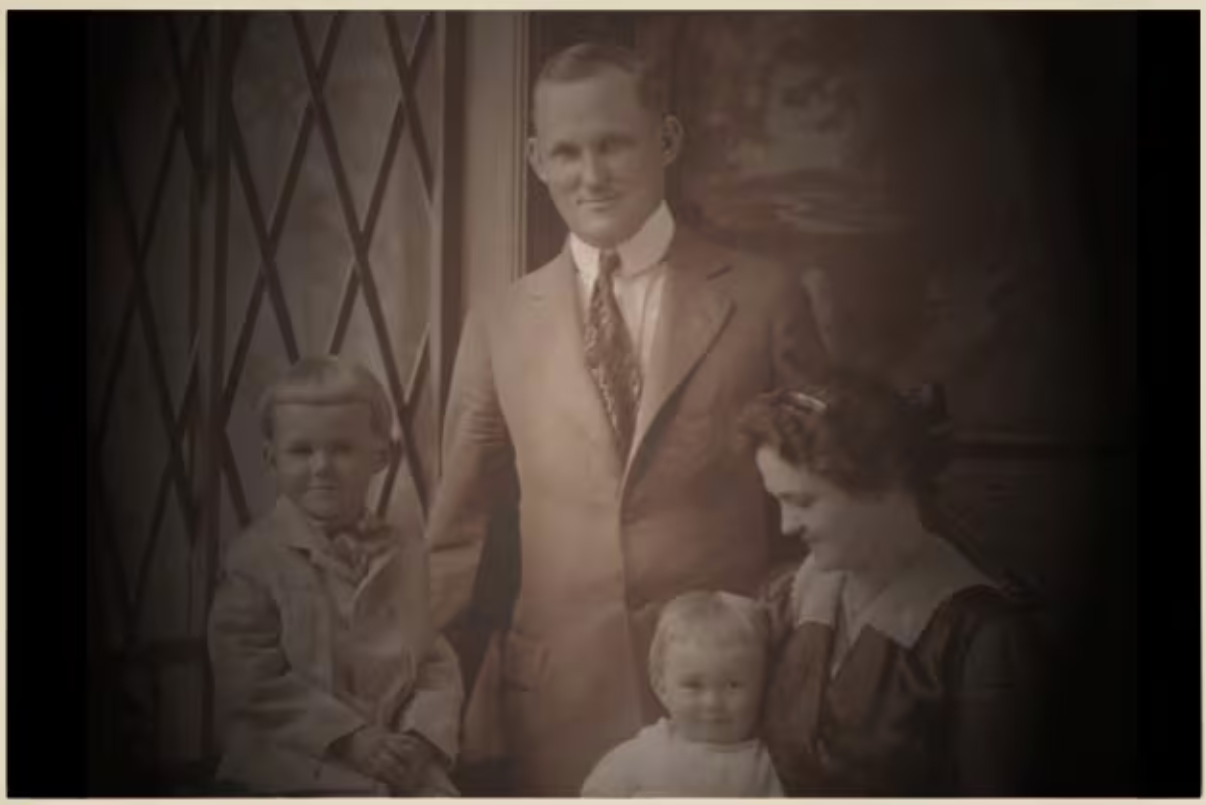
The first begins in 1921, when a traveling salesman named William Barnard, nicknamed “Papa,” walked door to door in Ohio selling a twenty-five-cent can opener. He called it the Polly. He believed, earnestly, that a better can opener could improve the health of the American family — that safer access to canned fruits and vegetables, year-round, would help people eat better.
Sixteen years later, in 1937, he met an engineer named Al Bersted.
By then Barnard and his wife had turned vegetarian, cut sugar and caffeine, and watched a sick family member recover on whole foods. Barnard had become a health-food evangelist, selling vitamins out of the back of his car. Bersted introduced him to a new invention: a blender. Barnard realized here was a machine that could make whole-food eating actually taste good.
His son Bill named it by splicing the Latin word for "life" onto the word "mix."
That became Vitamix.
Now the other story. You may remember it.
In 2016, a San Francisco company called Juicero launched a $700 countertop juicer, designed by Yves Behar, that could exert four tons of force — "enough to lift two Teslas," the founder said, comparing himself to Steve Jobs. Google's venture arm led the investment. About $120 million flowed in. The machine only worked with the company's own proprietary juice packs, which shipped weekly by subscription.
In April 2017, two Bloomberg reporters discovered that you could squeeze the packs by hand in about ninety seconds and get nearly the same amount of juice. Eighteen months after launch, the company was dead. A quarter of the staff was laid off; the rest were told to find new jobs.
The final packs went out in the mail.
At the time, plenty of commentators treated Juicero as a morality tale. It was the inevitable collision of Silicon Valley hubris with reality. How stupid, we all thought. But that reading is too easy. It flatters the rest of us and lets us walk away feeling wise.
The more honest take is that Juicero wasn't doing anything wrong by the logic of its environment. Doug Evans and his backers were rational actors inside an irrational system. They raised the money because the money was available to raise. They scaled at that pace because that's how a venture-backed company is supposed to operate. In the order of operations that now governs Silicon Valley — and increasingly the world — speed to success was the only metric that mattered.
Velocity, today, has become a virtue unhooked from any destination.
Juicero was merely a symptom of the unexamined belief that capital plus tools can become a substitute for time itself. That if a thing can be made faster, it must be. That if we can do more, more must get done.
This essay is not an argument against speed. It is an argument that slowness, chosen deliberately, is the most radical decision available to you.
And probably the most important one you will make over a lifetime.
***
Bruce McEwen, the late American neuroendocrinologist, spent nearly six decades at Rockefeller studying what stress does to the brain.
When he began his work in the 1960s, the scientific consensus was that the adult brain was a finished piece of architecture. McEwen proved that wrong. The brain, he showed, is constantly being reshaped by the chemistry of our lives. Most of what we now take for granted about the neuroscience of stress (that it damages memory, that it predisposes us to depression, that it accelerates aging itself, etc.) traces back, in some form, to his lab.
His most important contribution was a single phrase, coined with his colleague Eliot Stellar in a 1993 paper: allostatic load.
The idea is as simple as it is devastating. The human stress response is a brilliant piece of engineering for acute threats, like a lion circling on the savanna. The system is designed to turn on and off.
What McEwen demonstrated, across forty years of experiments, is what happens when the system never turns off. The hippocampus — the seat of memory — shrinks. The amygdala — the seat of fear — enlarges. Neurons in the dentate gyrus die off and inflammation rises. The immune system degrades. The body, asked to adapt to a threat that never resolves, begins to dismantle itself.
McEwen called this the biological tax on a life that is never allowed to slow down. In other words, our brains are constantly in overdrive. We are going too fast.
***
There is a word for what this feels like from the inside.
Hurry.
Hurry is the background hum of modern life. It is the unspoken conviction that there is always more to do than there is time to do it. The fear that if you stop, you fall behind, and that falling behind is a kind of failure. It is what you feel when you check your phone at a red light or when you open Slack in bed. Hurry is the texture of being alive in the 2020s.
And there is now, predictably, an enormous industry selling us the cure.
The productivity economy is a booming, multi-billion-dollar market, selling everything from apps, books, coaches, courses, AI agents, to second-brain systems. What it sells, underneath everything, is the promise that you can do more, faster.
It has correctly diagnosed the disease. Then it has prescribed a medicine that makes the disease worse.
Because the more you get done, the faster the cup fills back up. When life becomes an endless game of whack-a-mole, the only winning move is to stop playing. The more efficient you become, the more you are asked to do. The reward for clearing the list is a longer list.
This is the Juicero logic, applied to a human life. Capital plus tools as a substitute for time itself. And the result, in the body, is exactly what McEwen spent forty years documenting in the brains of stressed animals.
***
All good things take time.
Think of your relationships. Think of your kids' lives. You can't tell a flower to grow faster. Its beauty depends on time itself. Some things simply cannot be sped up, and those things, it turns out, are the good ones.
So here is the theory (or a provocation) I want to leave you with.
The most radical, countercultural, genuinely subversive act in business today is to deliberately go slow.
Papa Barnard took sixteen years to pivot from can openers to blenders. The company took decades of steady, unhurried improvement. Today his descendants still own it. Vitamix has no outside investors. It sells in 130 countries. The Barnard family has been at it for over a century.
Every juice-tech flavor-of-the-month that came up in Papa Barnard's lifetime is dead.
He is still in business.
***
It is okay to not do all the things, and to take your time to do things right.
I promise you, most of the small things do not matter. The email you did not answer or the Slack thread you did not weigh in on. It’s okay to be late on some things. In one year, you will not remember it. In five years, most of it will not register. In ten years, none of it will.
I say this with a specific kind of authority.
A few years ago, I almost died. I had emergency brain surgery, and in the hours before they wheeled me in I thought about what I would say to my daughter if I did not come out. One thing that kind of moment gives you is a clear sense of what actually matters.
The Harvard Study of Adult Development has been running for 88 years. It is the longest longitudinal study of human flourishing ever conducted. Its current director, Robert Waldinger, summarizes the headline finding in a single sentence: relationship quality, built slowly over decades, predicts health and cognitive resilience in old age better than cholesterol, wealth, or IQ.
The same compound-interest logic that produces a hundred-year company produces a hundred-year person. Nothing that matters in a human life is built fast. The brain, the body, the marriage, the friendship, the firm — all of it is the slow compounding of small, repeated, boring acts of showing up.
It may also be the one thing that fills a life with joy.